
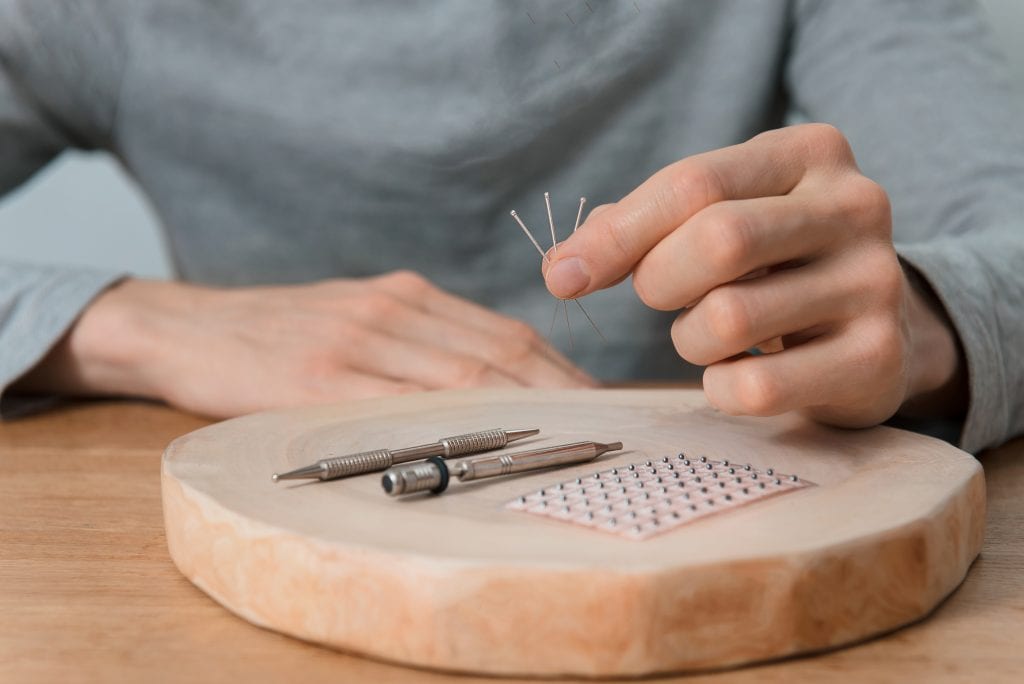
Choosing the right acupuncture needle size is an important part of providing safe, comfortable, and effective treatment. While acupuncture needles may look similar, they come in different lengths, diameters, and handle designs, each suited to particular clinical applications.
For practitioners, understanding acupuncture needle sizes and gauges helps with selecting appropriate equipment for different treatment areas and patient needs. A fine, short needle may be suitable for delicate facial treatments, while longer needles may be considered for areas with greater tissue depth.
However, needle selection involves more than choosing between thick and thin. Patient sensitivity, anatomy, treatment technique, and practitioner experience all influence the decision.
This guide explains common acupuncture needle sizes, how gauge measurements work, and what practitioners should consider when selecting needles for clinical use.
Understanding Acupuncture Needle Sizes and Gauges
Acupuncture needles are fine, solid instruments typically manufactured from stainless steel. Unlike hypodermic needles used for injections, they do not have a hollow shaft.
Their dimensions are described using two main measurements: diameter and length.
Diameter refers to the thickness of the needle shaft, while length describes the usable needle shaft, excluding the handle.
For example, a needle labelled 0.25mm × 40mm has a shaft diameter of 0.25mm and a shaft length of 40mm.
Both measurements influence how the needle handles during insertion and manipulation. Practitioners should therefore consider them together rather than selecting a needle based on thickness or length alone.
Professional acupuncture needles are available in multiple dimensions to accommodate different clinical techniques and treatment requirements.
What Does Acupuncture Needle Gauge Mean?
Needle gauge describes the thickness of a needle, but the terminology can sometimes be confusing.
In conventional needle gauge systems, a higher gauge number generally indicates a thinner needle. However, acupuncture manufacturers commonly identify needles directly by their diameter in millimetres.
For example, a 0.16mm acupuncture needle is thinner than a 0.25mm needle, regardless of the gauge terminology used.
Because gauge conversion systems are not always consistent between manufacturers, millimetre measurements provide a clearer way to compare acupuncture needle thickness.
Common Acupuncture Needle Diameters
The following table outlines common diameter ranges and their general characteristics.
| Needle Diameter | General Characteristics | Typical Applications |
| 0.12mm to 0.16mm | Very fine and flexible | Facial acupuncture and delicate treatments |
| 0.18mm to 0.20mm | Fine with gentle handling characteristics | Sensitive patients and selected superficial points |
| 0.22mm to 0.25mm | Balance of flexibility and control | General body acupuncture |
| 0.30mm | More substantial shaft | Selected musculoskeletal techniques |
| 0.35mm and above | Thicker shaft with greater resistance to bending | Specialised applications requiring appropriate training |
These examples are general descriptions, not fixed treatment recommendations.
A thicker needle does not automatically produce better results, and a finer needle is not necessarily appropriate for every patient.
The safest choice depends on the specific treatment point, anatomy, technique, and clinical assessment.
What Are the Most Common Acupuncture Needle Lengths?
Acupuncture needle length determines how much shaft is available for insertion. However, the full length should never be confused with the appropriate insertion depth.
A practitioner may select a longer needle for a particular technique without inserting its entire shaft.
Common acupuncture needle lengths include 8mm, 13mm, 15mm, 25mm, 30mm, 40mm, 50mm, and 75mm. Longer specialised needles are also available.
Short Needles: 8mm to 15mm
Short needles are commonly associated with delicate treatment areas, including certain facial, hand, and superficial acupuncture points.
Their limited length may be useful when precise, shallow techniques are required.
For example, J-type hand and face needles are available in 0.12mm × 15mm and 0.16mm × 15mm sizes.
These fine dimensions are particularly relevant to practitioners performing facial and other delicate acupuncture techniques.
Medium Needles: 25mm to 40mm
Needles in the 25mm to 40mm range are commonly used for general body acupuncture.
They provide flexibility across different treatment approaches while allowing practitioners to select diameters suited to patient sensitivity and tissue characteristics.
For example, 0.20mm × 30mm and 0.25mm × 40mm are familiar combinations in clinical practice.
However, a needle’s length does not determine how deeply it should be inserted. The actual depth and angle must always reflect the patient’s anatomy and the specific treatment location.
Longer Needles: 50mm to 75mm and Above
Longer acupuncture needles may be used for specialised treatments involving deeper tissue structures.
These applications require detailed anatomical knowledge, particularly when treating areas close to major nerves, blood vessels, or internal organs.
DongBang DB111 Long Acupuncture Needles sizes include 0.25mm × 75mm, 0.30mm × 75mm, and 0.30mm × 105mm.
Longer needles should only be used when clinically appropriate and by practitioners with the necessary training and experience.
How to Choose Acupuncture Needle Sizes for Different Body Areas
Different treatment areas require different considerations because tissue depth, sensitivity, and nearby anatomical structures vary throughout the body.
Face and Scalp
Facial and scalp acupuncture generally requires careful needle selection because many treatment points involve delicate tissues and sensitive anatomical structures.
Fine, short needles are commonly considered for these applications. Diameters around 0.12mm to 0.18mm may be used depending on the technique.
However, treatment around the face and head requires appropriate training, regardless of how small the needle is.
Hands and Feet
The hands and feet contain numerous nerves, blood vessels, tendons, and relatively superficial structures.
Practitioners often consider finer needles for selected points in these areas, particularly when patient sensitivity is a concern.
The exact length and diameter depend on the treatment point rather than a general rule for the entire hand or foot.
Arms and Legs
Acupuncture points on the arms and legs vary considerably in tissue depth.
Some points are relatively superficial, while others involve larger muscle groups.
Needles around 0.20mm to 0.25mm in diameter are commonly used for general applications, although smaller or larger dimensions may be appropriate.
Practitioners should account for individual anatomy rather than assuming that all points on the limbs require similar needle sizes.
Back, Hips, and Larger Muscle Groups
Musculoskeletal treatments involving larger muscle groups may require different needle dimensions from superficial acupuncture.
Longer needles or diameters around 0.25mm to 0.30mm may be considered where clinically justified.
However, these dimensions are not universal recommendations. Body composition varies, and deeper needling can introduce significant risks.
The chest, upper back, and areas near internal organs require particular attention because incorrect insertion may cause serious injury.
Does Acupuncture Needle Thickness Affect Pain?
Needle thickness can influence the sensation experienced during acupuncture, although it is not the only factor.
Finer needles may produce less noticeable insertion sensations for some patients, particularly in sensitive areas.
However, insertion technique, needle tip quality, tissue characteristics, and individual pain sensitivity can also affect comfort.
A patient may feel very little during insertion but experience a dull ache, heaviness, or tingling afterward.
These sensations do not necessarily indicate that the needle is too thick.
Practitioners should assess patient comfort throughout treatment and avoid assuming that thicker needles always cause pain or finer needles are completely painless.
Does a Longer Acupuncture Needle Mean Deeper Insertion?
Not necessarily.
Needle length indicates the available shaft length, not how deeply the practitioner must insert it.
Insertion depth is determined through anatomical assessment, the treatment point, patient characteristics, and the intended technique.
Using a longer needle does not justify deeper insertion.
In areas near the lungs, major blood vessels, or other vulnerable structures, inappropriate depth or angle can cause serious complications.
Practitioners must therefore select needle length carefully and maintain appropriate control throughout insertion and removal.
Acupuncture Needle Handle Types and Their Differences
Although diameter and length receive the most attention, handle design also influences how a needle feels during clinical use.
Spring Metal Handles
Spring metal handles have a coiled construction that provides a familiar grip for many practitioners.
These handles are commonly used in traditional acupuncture and musculoskeletal treatments.
The DongBang DB100 features surgical-grade stainless steel shafts, spring metal handles, and individual insertion tubes.
Handle preference depends on the practitioner’s technique and the level of tactile control required.
Plastic Handles
Plastic handle needles provide a different grip and handling experience.
Some practitioners prefer them for certain delicate techniques or when using a specific insertion method.
Handle design should be chosen based on comfortable handling, clinical requirements, and compatibility with the intended technique.
Guide Tubes and Packaging
Guide tubes can assist with positioning and insertion, particularly when using very fine needles.
Some products provide one tube for each needle, while others use blister packaging containing multiple needles and a shared guide tube.
The preferred format depends on practitioner technique, workflow, and infection control requirements.
How Does Needle Size Differ Between Acupuncture and Dry Needling?
Traditional acupuncture and dry needling may use similar fine, solid needles, but the treatment approaches can differ.
Dry needling commonly involves treating selected muscular structures, including trigger points, while acupuncture may involve points selected through Traditional Chinese Medicine or other acupuncture frameworks.
Some dry needling techniques involve needles with longer shafts or different diameters, depending on the target tissues.
However, there is no universal needle size that separates dry needling from acupuncture.
Practitioners must select needles according to their professional training, anatomical assessment, and the intended treatment rather than relying on a standard size for either technique.
How to Choose the Right Acupuncture Needle Size for Your Practice
The appropriate needle should balance clinical requirements, handling characteristics, and patient comfort.
Several factors deserve consideration before selecting a particular diameter and length.
Patient Sensitivity and Body Composition
Patients differ in their response to needle insertion.
Some experience very little discomfort, while others are more sensitive to needling sensations.
Age, body composition, tissue characteristics, and previous treatment experiences may also influence needle selection.
Practitioners should adapt their approach to the individual rather than using the same dimensions for every patient.
Treatment Technique
Different acupuncture techniques require different handling characteristics.
For delicate treatments, a fine needle may provide the precision required.
Other techniques may call for a more substantial shaft, although stronger stimulation should never be assumed to produce superior clinical outcomes.
Needle selection should support the intended procedure without introducing unnecessary risk.
Practitioner Experience
Very fine needles can be flexible and may require careful handling.
Longer needles also demand appropriate technique and detailed anatomical knowledge.
Practitioners should work within their training and competence rather than selecting unfamiliar dimensions solely because they are available.
Maintaining a Practical Range
Clinics treating different patients and body areas may benefit from keeping several needle sizes available.
For example, having fine, medium, and longer needle options allows practitioners to make individual selections based on their assessment.
NeedlePro offers multiple needle dimensions across its professional acupuncture range, supporting different treatment techniques and practitioner preferences.
The objective is not to stock every available size but to maintain a suitable selection for the treatments being provided.
Common Mistakes When Choosing Acupuncture Needle Sizes
Needle selection can become routine, particularly in busy clinics. However, relying on habit rather than clinical assessment may lead to inappropriate choices.
Common mistakes include:
- Using the same diameter and length for every treatment area
- Assuming thicker needles always provide stronger therapeutic benefits
- Choosing needle length without considering anatomy and insertion angle
- Overlooking patient sensitivity or previous treatment reactions
- Using damaged needles or compromised sterile packaging
These issues can often be avoided through careful assessment, appropriate equipment selection, and ongoing clinical education.
Why Needle Quality and Sterility Matter
Selecting the correct needle size is only one part of safe acupuncture practice.
Needles must also be sterile, suitable for their intended purpose, and handled according to appropriate infection control procedures.
Modern professional practice relies on sterile, single-use needles to reduce infection and cross-contamination risks.
Practitioners should inspect packaging before opening it and avoid using needles with visible damage or uncertain sterility.
Understanding sterilisation standards for acupuncture needles is important for maintaining safe clinical procedures.
Used needles must never be reused and should be discarded immediately into an appropriate sharps container.
Correct equipment handling protects patients and practitioners regardless of the needle diameter or length selected.
Final Thoughts
Choosing the right acupuncture needle size involves understanding diameter, length, handle design, and the requirements of the treatment being performed.
Fine, short needles may be appropriate for delicate applications, while longer or thicker needles may be considered for selected musculoskeletal techniques.
However, no single needle size is suitable for every treatment or patient.
The most important considerations are anatomical safety, patient comfort, practitioner competence, and appropriate clinical technique.
By understanding acupuncture needle sizes and gauges, practitioners can make more informed equipment choices while maintaining safe and consistent treatment standards.
Frequently Asked Questions
What is the most common acupuncture needle size?
Needles measuring approximately 0.20mm to 0.25mm in diameter and 25mm to 40mm in length are commonly used in general acupuncture practice. However, the appropriate size depends on the treatment point, patient anatomy, and clinical technique.
What does 0.25mm × 40mm mean on an acupuncture needle?
The first measurement, 0.25mm, indicates the diameter or thickness of the needle shaft. The second measurement, 40mm, indicates the shaft length, excluding the handle.
What is the thinnest acupuncture needle size?
Very fine acupuncture needles may have diameters around 0.12mm, although available sizes vary by manufacturer. These needles are commonly associated with delicate techniques such as certain facial acupuncture applications.
Are thicker acupuncture needles more painful?
Thicker needles may produce a more noticeable sensation for some patients, but discomfort also depends on insertion technique, treatment location, needle quality, and individual sensitivity. Thicker needles do not automatically cause more pain.
What acupuncture needle size is used for facial acupuncture?
Fine, short needles such as 0.12mm × 15mm or 0.16mm × 15mm may be used for selected facial acupuncture techniques. The exact choice depends on practitioner training, anatomy, and the treatment approach.
Can the same acupuncture needle size be used for all treatments?
No single size is appropriate for every treatment. Different body areas, techniques, and patient characteristics require different needle dimensions. Practitioners should select needles according to individual clinical assessment rather than relying on one standard size.