
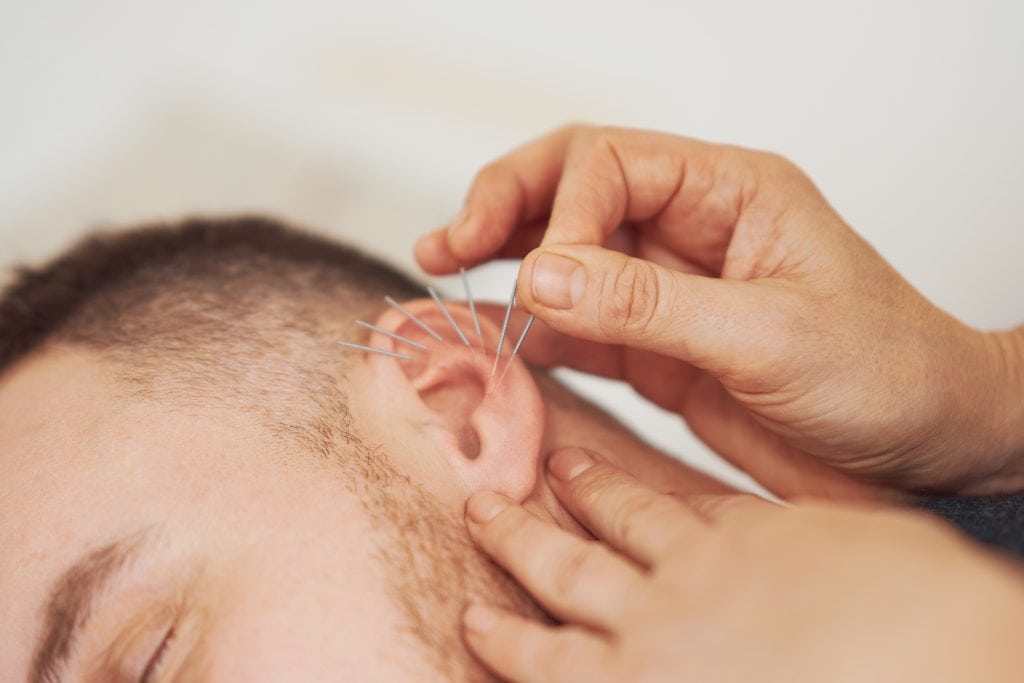
Ear seeding is a form of auricular acupressure that involves placing small seeds, beads, or pellets on specific pressure points on the outer ear. Unlike ear acupuncture, the technique does not use needles or break the skin.
Ear seeds are usually held in place with small adhesive patches and may remain on the ear for several days. People gently press them at intervals to stimulate the point underneath.
The practice has roots in traditional East Asian medicine and is commonly used as a complementary approach for concerns such as stress, discomfort, sleep, and general well-being. However, research into many of these potential benefits is still developing.
What Is Ear Seeding?
Ear seeding is a needle-free form of auriculotherapy that applies continuous, gentle pressure to selected points on the outer ear.
Small seeds or pellets are attached to these points using adhesive tape. Depending on the type, an ear seed may contain a traditional plant seed, stainless-steel pellet, ceramic bead, or another small material.
The idea is similar to acupressure. Instead of inserting a needle into a point, pressure is applied from the outside.
Ear seeding may be used on its own or between acupuncture treatments to provide ongoing stimulation to selected auricular points.
What Are Ear Seeds?
Ear seeds are small seeds, beads, or pellets attached to adhesive patches that are placed on the outer ear.
Traditional ear seeds were commonly made using seeds from the Vaccaria plant. Modern options can use materials such as:
- stainless steel
- titanium
- ceramic
- magnetic pellets
- gold- or silver-plated beads
- traditional Vaccaria seeds
Some modern ear seeds use small metal or magnetic pellets rather than actual plant seeds.
For example, professional ear seeds designed for auricular acupressure can use small dot magnets with adhesive backing, providing practitioners with a needle-free option for stimulating selected points.
Are Ear Seeds Really Seeds?
Some are, but not all ear seeds contain actual plant seeds.
The name comes from the traditional practice of using small Vaccaria seeds. Today, manufacturers also produce ear seeds using stainless steel, ceramic, magnets, and other materials.
Although the materials differ, the basic purpose remains the same: applying sustained pressure to a selected point on the outer ear.
What Is Auriculotherapy?
Auriculotherapy is an approach that focuses on stimulating specific areas of the outer ear.
Traditional East Asian medicine has long incorporated ear points into treatment. In this framework, different points are selected according to a person’s symptoms and overall treatment pattern.
Auricular approaches were also developed further in Western practice during the 20th century, leading to maps that associate different regions of the ear with areas of the body.
Auriculotherapy can involve several techniques, including:
- ear seeds
- acupressure
- ear acupuncture
- small press needles
- electrical or other forms of stimulation
Ear seeding is one of the least invasive options because it does not require the skin to be pierced.
How Does Ear Seeding Work?
Ear seeds work by applying gentle, sustained pressure to selected areas of the outer ear.
There are two common ways the technique is explained.
Traditional Explanation
In traditional Chinese medicine, health is associated with the balanced movement of qi, often described as vital energy, through pathways known as meridians.
Ear points are used within this traditional framework to influence different functions or areas of the body. Applying pressure to selected points is believed to help restore balance.
This is a traditional medical theory and should not be confused with an established anatomical mechanism.
Modern Research Perspective
From a modern physiological perspective, researchers are investigating how stimulation of the outer ear may interact with sensory nerves and the autonomic nervous system.
The ear contains a rich network of nerve endings, including branches associated with several cranial and spinal nerves. Researchers have explored whether stimulating particular auricular points may influence pain signalling, stress responses, or nervous-system activity.
These mechanisms are still being studied, and scientists have not established that every traditional ear point produces a specific effect elsewhere in the body.
What Are Ear Seeds Used For?
Ear seeds are used as a complementary technique for various wellness and symptom management goals, including relaxation, sleep difficulties, and temporary pain management. People interested in auricular acupressure for relaxation may also be familiar with acupuncture for stress, which uses a different method of stimulating selected points.
People commonly explore auricular acupressure for:
- stress and relaxation
- sleep difficulties
- temporary pain management
- headaches
- general tension
- nausea
- emotional wellbeing
- supportive care during other treatments
Ear seeds have also been studied in areas including lower back pain, postoperative discomfort, anxiety, sleep, and weight management.
However, being used for a condition does not mean ear seeds have been proven to treat or cure it.
They are best viewed as a complementary technique rather than a replacement for medical diagnosis or evidence-based treatment.
What Are the Potential Benefits of Ear Seeding?
The main practical benefit of ear seeding is that it provides a noninvasive form of ongoing auricular stimulation.
Because the adhesive seeds can remain in place for several days, stimulation does not have to end when an acupuncture or acupressure appointment finishes.
Potential advantages include:
Needle-Free Stimulation
Ear seeds sit on top of the skin instead of penetrating it. This may make them more appealing to people who are uncomfortable with needles.
Ongoing Pressure
Unlike a treatment performed only during an appointment, ear seeds can remain in place and provide gentle pressure over several days.
Easy to Incorporate Into Daily Life
Once applied correctly, ear seeds are small and relatively discreet. A practitioner may advise the wearer to press them gently at certain times during the day.
Complementary to Other Care
Practitioners sometimes use ear seeds alongside acupuncture or other treatment approaches rather than treating them as a replacement.
Do Ear Seeds Actually Work?
Research suggests auricular acupressure may have potential benefits in some situations, but the evidence for ear seeds is still limited and results are not conclusive.
Studies have investigated auricular acupressure for concerns including pain, stress, sleep quality, nausea, and other symptoms. Some have reported positive results, while study quality, treatment methods, participant numbers, and ear-point protocols can vary considerably.
That makes it difficult to conclude that ear seeds reliably treat a particular medical condition.
A sensible approach is to regard ear seeding as complementary care. It should not be used to delay medical assessment or replace treatment recommended by an appropriate healthcare professional.
Where Are Ear Seeds Placed?
Ear seeds are placed on selected points on the outer ear, not inside the ear canal.
There are many points used within different auricular systems, and the points selected can depend on the person’s symptoms, treatment goals, and the practitioner’s approach.
Rather than using the same group of points for everyone, an appropriately trained practitioner can assess which points are suitable for the individual.
Accurate placement also matters because the ear is a small anatomical area and different auricular points may be located close together.
How Are Ear Seeds Applied?
Ear seeds are generally applied in a few simple steps by a trained practitioner.
The practitioner first discusses the person’s needs and selects appropriate auricular points. The outer ear is checked and cleaned before the small adhesive-backed seed or pellet is positioned over the chosen point.
The adhesive holds the seed against the skin.
Once applied, the person may be instructed to press each seed gently for a short period at different times during the day.
Pressure should be firm enough to stimulate the point but should not cause sharp or persistent pain.
Professional tools such as tweezers can also make precise placement easier when working with small auricular products.
How Long Do Ear Seeds Stay On?
Ear seeds commonly remain in place for around three to five days, although the exact duration depends on the product, adhesive quality, skin sensitivity, and the practitioner’s instructions. Some people may need to remove them sooner if their skin becomes irritated or uncomfortable.
If redness, swelling, persistent pain, or discomfort develops, the ear seeds should be removed immediately. They should also be taken off if the adhesive begins to lift or no longer holds the seed securely in place.
After removal, allowing the skin some time to rest before applying another set may help reduce irritation and keep the area comfortable.
Do You Have to Press Ear Seeds?
Many practitioners recommend gently pressing ear seeds several times during the day to stimulate the point underneath.
The pressure does not need to be aggressive.
A person may notice mild tenderness or pressure when pressing a seed, particularly if the area is sensitive. Sharp pain is not the goal.
The frequency and duration of stimulation should follow the advice of the practitioner who applied the seeds.
Do Ear Seeds Hurt?
Ear seeds should not normally cause significant pain.
Because they sit on top of the skin, there is no needle insertion. Some points may feel slightly tender when pressure is applied, but this is different from persistent pain.
If an ear seed causes significant pain, swelling, increasing redness, or ongoing discomfort, it should be removed and the area checked.
Are Ear Seeds Safe?
Ear seeds are generally considered a low-risk, noninvasive technique when used appropriately, but side effects can still occur.
Possible issues include:
- skin redness
- tenderness
- irritation from the adhesive
- allergic reactions to metals or adhesive materials
- minor swelling
- dizziness or nausea in some people
Another practical risk is a loose pellet coming away from its adhesive and entering the ear canal.
Using good-quality adhesive products and checking the seeds regularly can help reduce this risk.
Who Should Be Careful With Ear Seeds?
Ear seeding may not be suitable for everyone.
Professional advice is particularly important if you:
- have broken skin or an active infection around the ear
- have eczema or another skin condition affecting the area
- have known metal or adhesive allergies
- are pregnant
- are undergoing medical treatment
- have an ongoing health condition
- experience unusual symptoms after applying ear seeds
Pregnancy deserves particular attention because certain auricular points have traditionally been avoided or used specifically in pregnancy-related protocols.
If pregnant, it is sensible to speak with an appropriately qualified healthcare professional before using ear seeds.
Ear Seeds vs Acupuncture: What’s the Difference?
The main difference is that acupuncture penetrates the skin with fine needles, while ear seeds apply pressure externally without breaking the skin.
| Ear Seeding | Acupuncture |
| Does not pierce the skin | Uses fine needles inserted through the skin |
| Uses seeds, beads, pellets, or magnets | Uses sterile acupuncture needles |
| Can remain in place for several days | Needles are removed after treatment |
| Provides gentle, sustained pressure | Provides targeted needle stimulation |
| Often used between appointments | Usually performed during a treatment session |
Both methods can involve points on the outer ear, but the treatment process differs. Ear seeds may remain attached for several days, while traditional acupuncture needles are generally removed after a treatment session. The appropriat needle retention time depends on the acupuncture technique, treatment goals, and practitioner assessment.
Auricular acupuncture may use fine acupuncture needles or specialised products such as press needles, while ear seeds provide a non-penetrating alternative.
The techniques are related, but they are not interchangeable.
Can You Apply Ear Seeds Yourself?
Ear seed kits are available for home use, but professional guidance is useful before applying them yourself. The main challenge is not attaching a small bead to the ear, but identifying the correct auricular points and understanding when ear seeding may or may not be appropriate.
A practitioner familiar with auriculotherapy can assess your individual needs, identify suitable points, and demonstrate how to position the seeds correctly. They can also explain how much pressure to apply, how long to leave the seeds in place, and which conditions or circumstances may make ear seeding unsuitable.
Once you have received appropriate guidance, your practitioner may recommend using ear seeds between appointments as part of your ongoing care.
Final Thoughts
Ear seeding is a needle-free form of auricular acupressure that uses small adhesive seeds, beads, or pellets to stimulate selected points on the outer ear.
Traditional ear seeds were made from Vaccaria seeds, while modern products may use metal, ceramic, or magnetic pellets. They commonly remain attached for several days and may be pressed gently during that time.
People use ear seeds for goals ranging from relaxation and sleep support to managing discomfort, but scientific evidence is still developing. They should therefore be viewed as a complementary practice rather than a proven treatment or replacement for medical care.
For practitioners, appropriate point selection, good-quality materials, skin care, and clear instructions are important parts of safe ear seeding. For anyone trying the technique for the first time, guidance from a suitably trained practitioner is the best place to start.
Frequently Asked Questions About Ear Seeding
What is ear seeding in simple terms?
Ear seeding is a form of acupressure that places small adhesive seeds or pellets on selected points of the outer ear. The seeds provide gentle pressure without piercing the skin.
What are ear seeds made from?
Traditional ear seeds use Vaccaria plant seeds. Modern versions may use stainless steel, titanium, ceramic, magnetic, or plated metal pellets attached to adhesive tape.
How long should ear seeds stay on?
Ear seeds commonly stay in place for around three to five days. They should be removed sooner if they cause irritation, discomfort, or problems with the adhesive.
Do ear seeds pierce the skin?
No. Ear seeds rest on the surface of the skin. This distinguishes them from ear acupuncture and press needles, which penetrate the skin.
Can ear seeds help with stress?
Ear seeds are commonly used as complementary support for stress and relaxation. Some research into auricular acupressure has reported promising findings, but evidence remains limited and individual results vary.
Can ear seeds help with pain?
Auricular acupressure has been studied for several types of pain, and some studies have reported improvements. More high-quality research is needed before ear seeds can be considered an established treatment for pain.
Are ear seeds reusable?
Ear seeds are generally intended for a limited period of use. Once removed, they should not simply be reapplied, particularly when the adhesive has been exposed to skin oils, moisture, and environmental contaminants.
Are ear seeds the same as ear acupuncture?
No. Both may target points on the outer ear, but ear acupuncture uses fine needles that penetrate the skin. Ear seeds provide pressure from the surface without needles.